
Mussel die-off and Catfish: A Summer Feast
Vitali DalkeDID YOU KNOW? The Silent Summer Festival!
When summer is in full swing, the sun relentlessly beats down on the water's surface, and water temperatures reach their maximum, the underwater world often seems to fall into a lethargic calm. But while everything above is still, a strange and fascinating, often unnoticed phenomenon occurs at the bottom of our rivers and lakes: the freshwater mussel ball.
Why do mussels "open up"?
The wide opening of mussel shells is by no means a sign of pleasure or relaxation, but purely a struggle for survival. The physics of water dictates an inexorable rule: the warmer the water becomes, the less dissolved oxygen it can hold.

When water temperatures in hot summers exceed the critical mark of 25 °C, native bivalves – such as the swan mussel (Anodonta cygnea) or the zebra mussel (Dreissena polymorpha) – experience massive heat stress. To still be able to breathe in this oxygen-depleted environment, they react instinctively:
Maximum Filtration: They open their shells as wide as possible. They desperately try to direct the maximum amount of flowing water over their gills to filter out the last remaining oxygen molecules.
Muscle Failure: If the oppressive heat period persists, the mollusks reach their biological limits. The strong adductor muscle, which normally holds the shells protectively together, slackens, and the mussel eventually dies from exhaustion or lack of oxygen.
A Protein "Balloon"
What follows is a macabre but ingenious spectacle of nature. Once the mussel is open and dead, decomposition processes quickly begin underwater. Bacteria get to work, producing putrefactive gases that accumulate in the mollusk's tissue.
The mussel meat literally becomes a microscopic hot air balloon. It detaches from the hard shell at the bottom of the water and slowly begins to rise towards the surface. Often, this decomposed, highly proteinaceous, and odorous meat simply floats weightlessly between two water layers (in the pelagic zone). For the predators of the water, this is true manna – an extremely nutrient-rich snack that drifts effortlessly right to their mouths.
The Catfish: The Clever Opportunist

This is where the undisputed king of our waters enters the stage. The catfish (Silurus glanis) is a master of adaptation and a brilliant opportunist. In times of extreme heat, it also slows down its metabolism and avoids any unnecessary exertion. Why should it actively and energy-consumingly hunt agile prey fish in the shimmering heat when the buffet comes to it all by itself?
Highly Sensitive Sensors: With its long, ultra-sensitive barbels, equipped with countless taste and touch nerves, the catfish literally "tastes" the water. It perceives the amino acids of the rising mussel meat from a great distance.
Zero Effort: The catfish strategically positions itself in open water or in deeper channels through which the gentle current carries these drifting river "sweets."
The Vacuum Cleaner Effect: Once it has located a bite, it doesn't even have to bite. By abruptly opening its huge mouth and spreading its gill covers, it creates a massive vacuum. The floating mussel meat is simply and highly efficiently sucked in.
For us anglers, this phenomenon explains one of the most frustrating situations in midsummer: when the catfish has zeroed in on this free mussel buffet, it often completely ignores our elaborately presented baits. The fish are simply gorged on this easily earned prey!
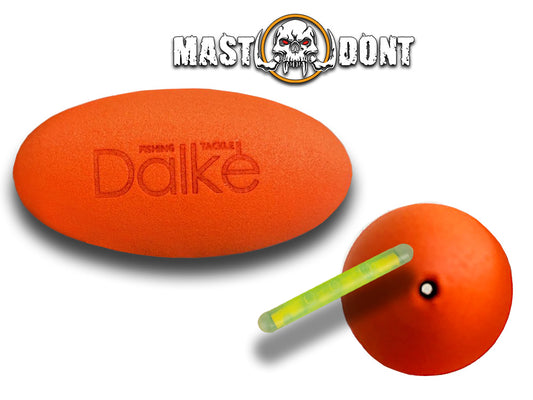
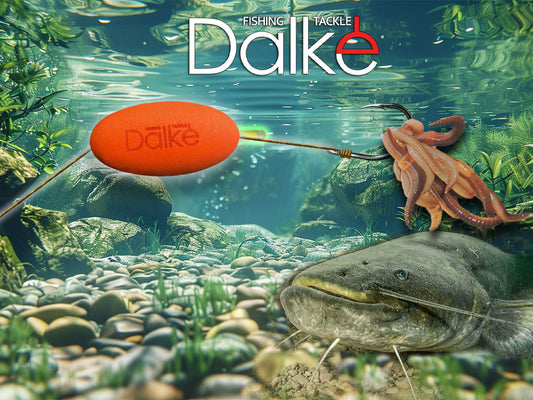
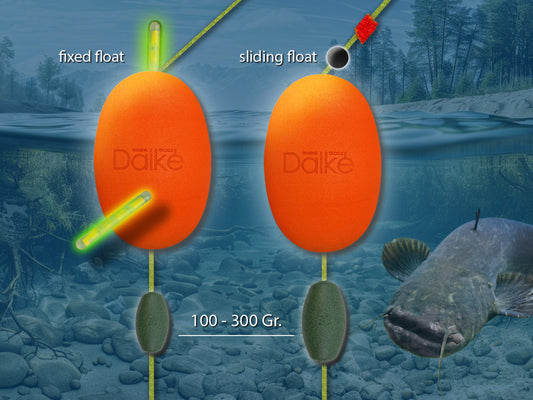
Sometimes, surface lures can provoke a bite from a catfish, but this usually happens as a pure aggression bite if the lure is presented directly in front of the fish's mouth – the catfish snaps instinctively. Some anglers try to outwit the catfish during this time by specifically using dead mussels as bait. However, a mussel presented on the bottom usually remains untouched. Here, it is better to use a light surface rig: instead of a large catfish float, an inconspicuous subfloat without lead weight is used. A large single hook is baited with mussel meat, and the entire rig is presented drifting on the surface.
However, even with this method, you need a lot of luck. You first have to find the catfish where they are happily slurping up the dead mussels from the water surface and then approach them absolutely stealthily. Once you have spotted them, you can carefully cast the rig to the fish and wait for one to snap. Fortunately, this period usually does not last long. After this short phase, catfish can again be caught very well with classic methods.
A tip from my practical experience: before and after the mussel die-off, tapping with the catfish clonk works wonderfully. Sometimes, if you are in the right place at the right time, tapping can also bring the desired success in the middle of the mussel die-off period.
The Role of Nature
Even if this mass mussel die-off in summer seems dramatic at first glance, it reveals the impressive self-cleaning power of our ecosystems.
In this critical phase, the catfish takes on the essential role of "health police" and water cleaner. By consuming vast quantities of decaying organic matter, it and other scavengers remove potentially dangerous biomass from the system. If all the dead mussel meat were to remain on the bottom and rot undisturbed, a massive bacterial bloom would occur. This would completely deplete the already scarce oxygen in the water, form foul sludge, and provoke the tipping of the stagnant water, which would inevitably lead to further fish kills.
Thus, the circle of nature closes: through its silent feast, the catfish protects the very habitat over which it rules and saves the water from suffocation.
Vitali Dalke